
Unveiling the Magic: What Is an Aviation Borescope?
The Science Behind Borescopes
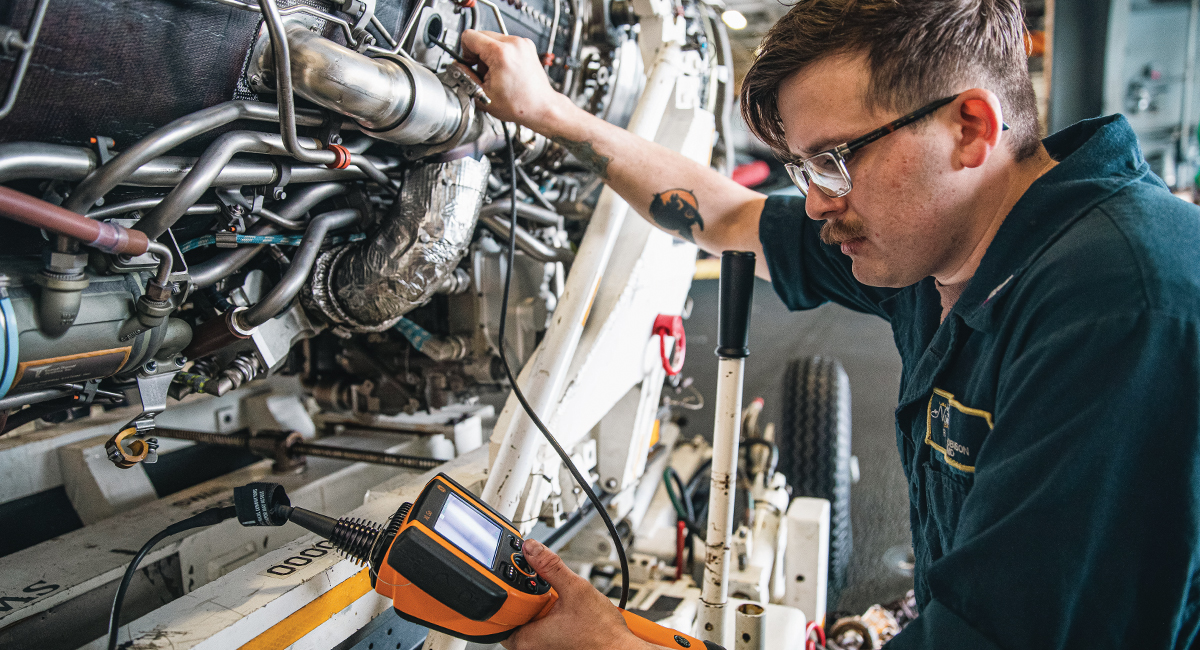
Aviation borescopes are specialized optical instruments utilized to inspect hard-to-reach areas of aircraft engines and other critical components. Essentially, a borescope consists of a rigid or flexible tube housing a camera or a series of lenses, allowing technicians to visually inspect internal surfaces without disassembling the aircraft. The innovation behind borescopes has revolutionized aerospace maintenance by providing a non-destructive means of assessment, crucial for maintaining operational safety and compliance.
The core of a borescope’s operation lies in its ability to transmit light from an external source into the inspection area. This illumination is vital for capturing clear images of complex geometries and internal machinery. The technology integrates optics and digital imaging, which allows for high-resolution captures of intricate details. With advancements in digital technology, many modern borescopes now offer real-time video capabilities, further enabling technicians to make immediate assessments during inspections. This advancement is critical given the increasingly stringent safety regulations within the aviation industry.
Essential Components: Understanding the Technology
Understanding how borescopes work necessitates a deeper look at their essential components. The eyepiece or camera head is where the optical path starts; it can either be rigid or flexible, depending on the required flexibility for the inspection. The choice between rigid and flexible systems often depends on the inspection points’ accessibility and layout in an aircraft. Rigid borescopes, for instance, are typically used in fixed or well-defined pathways, like inspecting the combustion chambers of jet engines. In contrast, flexible borescopes are designed for maneuverability, allowing for intricate navigation around obstacles within the aircraft.
The next critical component is the fiberscope, a series of optical fibers that transmit light and images from the target area back to the viewer. This fiber optic technology is what enables spectacular image quality while ensuring that the equipment remains relatively lightweight. Recent innovations in imaging sensors have produced high-definition images and 3D imaging capabilities, providing mechanics and engineers with comprehensive visual insights into potentially hazardous areas within the aircraft.
Everyday Applications in Aircraft Maintenance
Aviation borescopes play a pivotal role in various routine and critical inspections across different aircraft types. They are particularly vital during periodic maintenance checks, where they help in assessing engine components, turbine blades, fuel systems, and more. Technicians utilize borescopes to inspect for signs of wear and tear, corrosion, or debris lodged in critical components. Unlike traditional inspection methods, using a borescope significantly reduces the need for disassembly. This not only conserves man-hours but also minimizes the risk of extra damage that could occur from dismantling sensitive equipment.
Furthermore, borescopes are integral during the troubleshooting processes. They provide immediate visual feedback, which can expedite the diagnosis of complex mechanical issues. By providing an intricate look at problematic areas, maintenance teams can arrive at accurate solutions faster, reducing the possibility of prolonged downtime. Additionally, borescopes can be used to document findings through high-quality images or videos, creating a visual record that can aid future inspections or escalated troubleshooting processes.
Inspection Revolution: Why Borescopes are Game Changers
Enhancing Safety: A Deep Dive into Preventative Maintenance
The aviation industry holds safety as its highest priority, and the introduction of borescopes has profoundly impacted preventative maintenance strategies. By allowing technicians to conduct thorough inspections without dismantling components, borescopes enable early detection of potential issues that can lead to catastrophic failures if left unchecked. For instance, operators can identify cracks, erosion, or abnormal wear in jet engines that would traditionally require extensive disassembly for inspection.
This proactive approach to maintenance aligns perfectly with adopted strategies under safety management systems (SMS) in aviation. The ability to conduct regular and thorough inspections bolsters compliance with regulatory bodies such as the FAA and EASA. In turn, by utilizing borescopes, operators not only ensure the airworthiness of their aircraft but also contribute to the industry’s overarching safety culture. Through rigorous inspection protocols enhanced by borescope technology, the potential for in-flight emergencies is drastically reduced, safeguarding passengers, crew, and the aircraft itself.
Saving Time and Money: Efficiency Benefits of Borescope Inspections
One of the most compelling advantages of incorporating borescopes into aircraft inspection routines is the significant time and cost savings they offer. Traditionally, maintenance teams spent countless hours disassembling parts of aircraft to perform necessary inspections. This procedure could not only extend the time the aircraft was out of service but also incur substantial labor costs associated with reassembly, adjustments, and potential repairs. Borescope technology streamlines this process, allowing for quick and efficient assessments without the need for substantial disassembly.
The efficiency gains are multifaceted; not only do borescope inspections save on direct labor costs, but they also mitigate indirect costs associated with prolonged downtimes. With aircraft on a tight operational schedule, a swift inspection can mean the difference between a plane returning to service on-time or unnecessary delays that can ripple through an airline’s operations. As a result, airlines that adopt borescope technology often report improved on-time performance metrics and operational efficiency, presenting a strong business case for ongoing investment in this vital inspection tool.
Reducing Downtime: Keeping Aircraft in the Skies
In the highly competitive aviation sector, minimizing aircraft downtime is crucial. Unplanned maintenance can lead to significant financial losses due to canceled flights and dissatisfied customers. By employing aviation borescopes, operators can effectively reduce the amount of time aircraft spends in maintenance. This is primarily due to the speed at which technicians can conduct detailed inspections: a task that might have once taken days can now often be completed in a matter of hours.
Furthermore, many airlines are adopting predictive maintenance strategies, utilizing data analytics in conjunction with borescope insights to forecast potential issues before they manifest. By identifying patterns in wear and tear through regular inspections, airlines can schedule maintenance at optimal times, further reducing the number of aircraft removed from service at any given moment. This capacity not only boosts operational efficiency but also builds trust with passengers as airlines are less likely to face unexpected cancellations or delays due to unforeseen mechanical issues.
Choosing the Right Borescope: What to Look For
Types of Borescopes: Rigid vs. Flexible
When selecting a borescope, users must first consider the type that best suits their aviation maintenance needs. Rigid borescopes are characterized by their straight, stiff structure, which can be advantageous for inspections in straight, accessibly designed spaces. They often provide superior image quality due to their more straightforward optical path and are ideal for tasks like inspecting the interior of aircraft engines or structural components where visibility is paramount. However, their usage is limited to areas that can accommodate the rigidity of the tool.
On the other hand, flexible borescopes are designed for access in tighter spaces where adaptability is required. These borescopes have flexible shafts that allow technicians to navigate around obstacles, ensuring that they can obtain necessary visual information from convoluted areas. While flexible borescopes may occasionally compromise on image quality, advancements in fiber optic technology have significantly narrowed this gap, allowing flexible models to deliver exceptional visual fidelity. Ultimately, the choice between rigid and flexible borescopes rests upon the specific inspection needs, the components requiring assessment, and the environments technicians are likely to encounter.
Key Features to Consider: Resolution, Lighting, and Size
Beyond the type of borescope, several key features must be evaluated when selecting the appropriate model for aircraft inspection. Image resolution is critical; higher-resolution images allow for better detection of minute issues that could escalate into significant concerns if unnoticed. Inspectors should aim for digital borescopes offering high-definition (HD) capabilities, as these provide clear images that can be analyzed in detail.
Lighting is another essential factor. Borescopes need adequate illumination to capture high-quality images in dark and confined spaces. Many models now incorporate adjustable LED light sources or external light guides to tailor brightness levels appropriately based on the specific inspection environment. Furthermore, the physical size of the borescope plays an important role, especially in tight spaces within aircraft. Models with smaller-diameter heads arguably provide greater access to confined areas, allowing technicians to readily accomplish their inspection tasks.
Budgeting for Quality: Is It Worth the Investment?
Finally, the investment in quality aviation borescopes often warrants a closer look. While cheaper models may seem enticing, they may not deliver the performance and reliability essential in aviation maintenance. Investing in high-quality borescopes can contribute significantly to the efficiency and effectiveness of inspection processes. Given the importance of safety and regulatory compliance in aviation, the returns on investment are often seen in reduced maintenance costs, better safety margins, and enhanced operational efficiency.
Furthermore, acknowledging the long-term nature of this investment is crucial; high-end borescopes are often more durable and offer better support from manufacturers in terms of service and upgrades. In the final analysis, the decision to invest in quality equipment not only supports immediate needs but also positions operators for future technological advancements in maintenance practices.
The Future of Aircraft Inspections: Innovations on the Horizon
Smart Technology: Integrating AI with Borescopes
The future of aircraft inspections is on the verge of a significant transformation due to the incorporation of artificial intelligence (AI) into borescope technology. By integrating AI with imaging software, technicians can enhance their ability to detect anomalies during inspections. For instance, machine learning algorithms can be trained on vast datasets of aviation components, allowing them to identify patterns associated with wear and tear that are not immediately perceptible to human inspectors.
AI technology can also recommend actionable insights based on these identified patterns, helping maintenance teams prioritize inspections and necessary interventions. This capability will not only optimize the time spent on inspections but also enhance overall maintenance accuracy and safety. As engineers and technicians become increasingly connected with this smart technology, the possibility of predictive maintenance via AI-integrated borescopes emerges, further reducing the aircraft downtime and costs associated with tiered inspections.
Visual Enhancement: The Role of 3D Imaging and Augmented Reality
Another key development on the horizon is the integration of 3D imaging and augmented reality (AR) with borescope inspections. Such technology accelerates the way technicians interpret the data gathered during inspections by providing three-dimensional visualizations of internal components. This enhances the understanding of the structural integrity of various aircraft parts, presenting a clearer picture of where potential issues may lie. With AR, technicians can even overlay digital information on real-world environments, streamlining the decision-making process during repairs.
As 3D imaging capabilities evolve, the ability to generate detailed, volumetric images of complex aircraft components will significantly reduce the incidence of oversight during manual inspections. By presenting an interactive view of internal structures, 3D imaging empowers maintenance professionals to make informed decisions grounded in a comprehensive understanding of the aircraft’s condition. The implications of AR in maintenance extend to facilitating better training experiences, allowing engineers to visualize and interact with aircraft components in a controlled environment, ultimately reinforcing their skill sets.
Sustainability and Safety: Borescopes in Eco-Friendly Aviation Practices
Lastly, sustainability has become an essential theme in the aviation industry, prompting various technological innovations in inspection practices. Borescopes pave the way for eco-friendly aviation by allowing for non-invasive assessments, thereby minimizing the environmental impact of traditional maintenance practices. Reducing the frequency of disassemblies conserves resources, minimizes waste, and lowers emissions associated with aircraft maintenance procedures.
As regulatory bodies push for greener practices, those adopting advanced borescope technologies are poised not only to comply with emerging standards but also to demonstrate a commitment to sustainability. Furthermore, by minimizing material costs through efficient inspections and maintenance, operators can allocate more resources to sustainable innovations within their fleets. In this light, borescopes stand at the forefront of evolving traditional aviation practices into more eco-conscious approaches, shaping the future of the industry as a whole.
FAQ
Question: What types of environments are best suited for rigid borescopes? – Rigid borescopes are ideal for environments where inspection points are easily accessible and well-defined, such as inspecting straight pathways in aircraft engines or structural components.
Question: How do aviation borescopes enhance training for maintenance personnel? – The advancements in 3D imaging and augmented reality provided by modern borescopes allow maintenance personnel to visualize and interact with complex components, significantly enhancing learning and skills development.
Question: What role does lighting play in the effectiveness of borescopes? – Adequate lighting is crucial for borescopes to capture clear, high-resolution images in dark and confined spaces, as many critical inspections occur in areas with limited visibility.
Question: Can borescopes be beneficial for non-aviation applications? – Yes, while primarily designed for aviation, borescopes can also be used in other fields, such as automotive, manufacturing, and plumbing, for similar non-destructive inspection purposes.
Question: What are the key factors affecting the cost of aviation borescopes? – The cost of aviation borescopes is influenced by features such as image resolution, lighting capabilities, flexibility, and the technology used, particularly advanced imaging options like 3D and AI integration.
Question: How can borescopes be integrated into predictive maintenance strategies? – Borescopes can be part of predictive maintenance strategies by providing regular, detailed inspections that utilize data analytics to forecast potential issues before they arise, thereby minimizing unexpected downtimes.
Question: What advancements in borescope technology are expected in the near future? – Future advancements may include increased AI integration for better anomaly detection, enhanced imaging capabilities, and improved AR features to streamline inspection processes and offer deeper insights.
Question: How do borescopes contribute to eco-friendly practices in aviation? – Borescopes support eco-friendly practices by enabling non-invasive inspections that minimize the need for disassembly, thus reducing waste and emissions associated with traditional maintenance methods.
Useful Resources
- Federal Aviation Administration (FAA)
- European Union Aviation Safety Agency (EASA)
- Aviation Pros
- Royal Aeronautical Society
- American Society of Mechanical Engineers (ASME)
- com
- Society of Automotive Engineers (SAE)
- Aviation Week Network